




Shopify migration in four weeks for retailers on legacy PHP ecommerce platforms
Your platform needs
a security patch.
What if it can’t have one?
Two critical PHP flaws were made public on 21 October. Older PHP versions get no fix. If you are on one, the question is how fast you can move.
On 21 October, two critical flaws in PHP, the language behind most older ecommerce platforms, were made public. Fixes exist only for the newest versions. If your store runs on an older proprietary platform, the question isn’t whether to move. It’s how fast you can move without losing what you’ve built.


From your platform to Shopify.
Migration specialists for established retailers on these platforms, and most others.
- Visualsoft
- WooCommerce
- BigCommerce
- PrestaShop
- Magento / Adobe Commerce
- OpenCart
- EKM
- ShopWired
- Sellerdeck (Actinic)
- CubeCart
- Shopware
- osCommerce
- Zen Cart
- Lightspeed eCom
- Wix
- Squarespace
- Custom PHP builds
What happened on 21 October.
This isn’t a scare story. It’s a dated record of what was published this week, with the sources listed at the foot of the page.
- 20 October 2026
Details of two critical vulnerabilities in PHP leak ahead of their planned disclosure.
- 21 October 2026
PHP releases fixes for CVE-2026-109618 and CVE-2026-109619. Both are rated 9.2 out of 10 for severity, and both let an attacker run code on a web server without logging in.
- Which versions
Fixes exist only for PHP 8.2, 8.3, 8.4 and 8.5. Older versions, including PHP 5 and 7, receive no fix. The affected code reaches back to PHP 5.4.
- The official advice
The FBI advised organisations that cannot update straight away to take affected systems offline. CISA urged immediate patching.
- Since then
Security firms reported attack attempts within hours of the leak.
If your platform runs an older version of PHP, there is no patch coming. There is only a plan.
On most platforms, you can’t patch it yourself. You wait.
Many established UK retailers run on proprietary platforms built ten or more years ago and owned by the agency that hosts them. That model had real advantages. But it means one company controls your code, your hosting, your upgrade timetable and your contract.
When a flaw like this lands, you can’t hire a developer to fix it this afternoon. You wait for your provider. On Shopify, the platform, the hosting and the security are run for every store, all the time. You don’t patch servers on Shopify. Shopify does.
| Legacy proprietary PHP platform | Shopify | |
|---|---|---|
| Who patches the platform | Your provider, on their timetable | Shopify, continuously, for every store |
| Can you check your PHP version | Usually not without asking | Not needed: you don’t run servers |
| Card payment security | Depends on your provider’s setup | PCI DSS Level 1 certified |
| Contracts | Often multi-year minimum terms | Plans you can change or cancel |
| Apps and integrations | A limited set chosen by your provider | Thousands of apps |
| Who owns your theme and data | Check your contract | You do |
Legacy platforms differ. Ask your provider the three questions below for the facts about your own store.
Three questions to ask your provider this week.
You don’t need to be technical. You need three answers, in writing.
Which version of PHP is my store running on today?
The answer decides whether a fix even exists for your platform.
Has it been patched against both flaws, and on what date?
CVE-2026-109618 and CVE-2026-109619. A date is an answer. “We’re looking into it” isn’t.
If it can’t be patched, what’s the plan, and when can I leave?
You need the timetable for a fix and the end date of your contract.
Can’t get clear answers? Send me your store address. I’ll check what’s publicly visible and tell you, plainly, where you stand.
A Monday morning, two ways.
The same news lands on two retailers’ desks. What happens next depends on who runs the platform.
On Shopify
- 8:02You read about a critical web vulnerability over coffee.
- 8:05You check Shopify’s status page. Nothing for you to do.
- 9:00Your team packs the weekend’s orders. The week carries on.
On a legacy platform
- 8:02You read the same news.
- 8:30You email your platform provider to ask what version you’re on.
- 11:45An automated reply arrives: “We’re investigating.”
- 14:00Your insurer asks whether your site is affected. You don’t know.
- 17:30You’re still waiting, and still taking orders.
Same news. One business gets on with the week.
The 4-week migration.
Replatforming used to take six months. Mine takes four weeks, because a senior team does it, not a queue.
Audit and map
I map every product, variant, category, customer, order and address on your current store, agree the design direction and lock the launch date.
Design and build
Your Shopify theme is built to your brand, not a template with your logo on it. Apps are chosen to replace every feature you rely on today.
Move and connect
Products, customers and order history move across. Every old address is permanently redirected. Payments, shipping, email and stock systems are connected and tested.
Test and launch
Full checkout testing on real devices, a final data sync on launch day so no orders are lost, then go-live with 30 days of support included.
What moves with you.
Everything your customers and Google know you by comes across. You keep trading on the old store until the moment the new one goes live.
- Products, variants, prices and stock
- Categories and collections
- Product images and descriptions
- Customer accounts
- Order history
- Reviews
- Information pages and blog posts
- Discount codes you still use
- Every old address, permanently redirected
- Page titles and meta descriptions
- Google Analytics, Meta and Google Ads tracking
- Your domain name
Your rankings come with you.
Your Google rankings took years to build. A careless migration loses them in a weekend. Older platforms often use page addresses that Shopify doesn’t, such as product and category addresses ending in codes. Every one of them has to point to its exact new home.
Every address mapped
A full crawl of the old store before I start, so every product, category and page has a destination.
Every redirect tested
Permanent redirects are set and checked before launch, with titles, descriptions and structured data carried across.
Thirty days watched
Sitemap resubmitted on launch day and Search Console checked against a baseline taken before I began.
Bespoke Shopify website design and development by someone who has engineered 350+ stores.
I’ve done this before, for retailers who couldn’t afford to get it wrong.
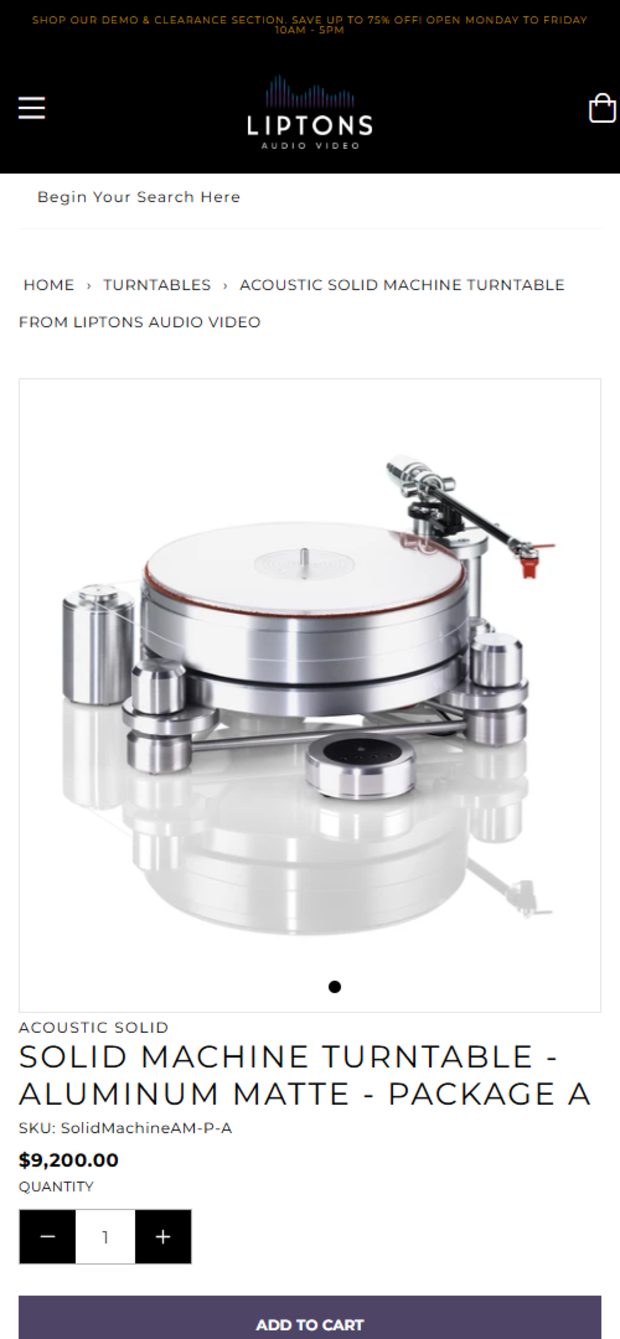
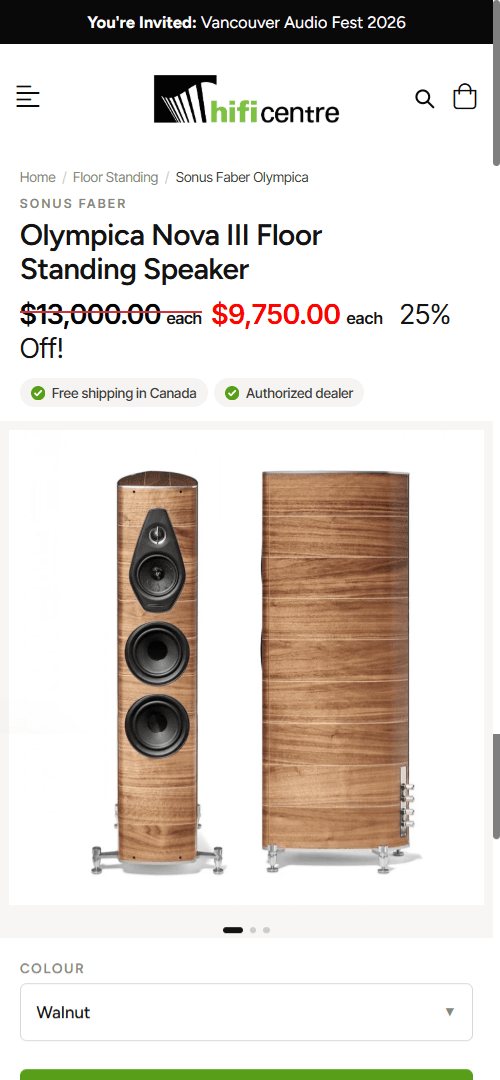
Two established retailers, rebuilt and grown by the same senior team. Lipton’s was moved from its old platform with 2,800+ products migrated. Hi-Fi Centre was rebuilt on its existing Shopify store.
Stores I’ve designed, built and moved.
The kind of store I build: native Shopify theme code, designed for desktop and mobile in parallel, and engineered to load fast before a single app is added.

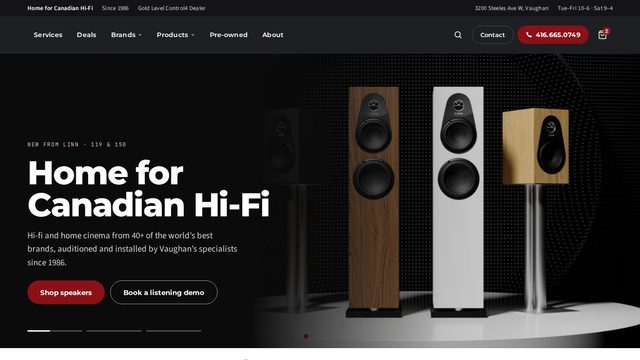
Thirty premium brands,
one store.
A bespoke Shopify store for a premium hi-fi and home cinema retailer in Ontario, designed, built and migrated from the ground up. A filtering layer lets customers narrow a thirty-brand catalogue by what they actually care about, with 2,800+ products migrated and re-optimised.

A custom theme,
built to rank.
A custom Shopify theme for a Vancouver high-end audio and video retailer, built on their existing store with technical SEO first. Catalogue, theme and site architecture were rebuilt as one piece of work in eight weeks, and pages now load in under a second.

A showroom,
brought online.
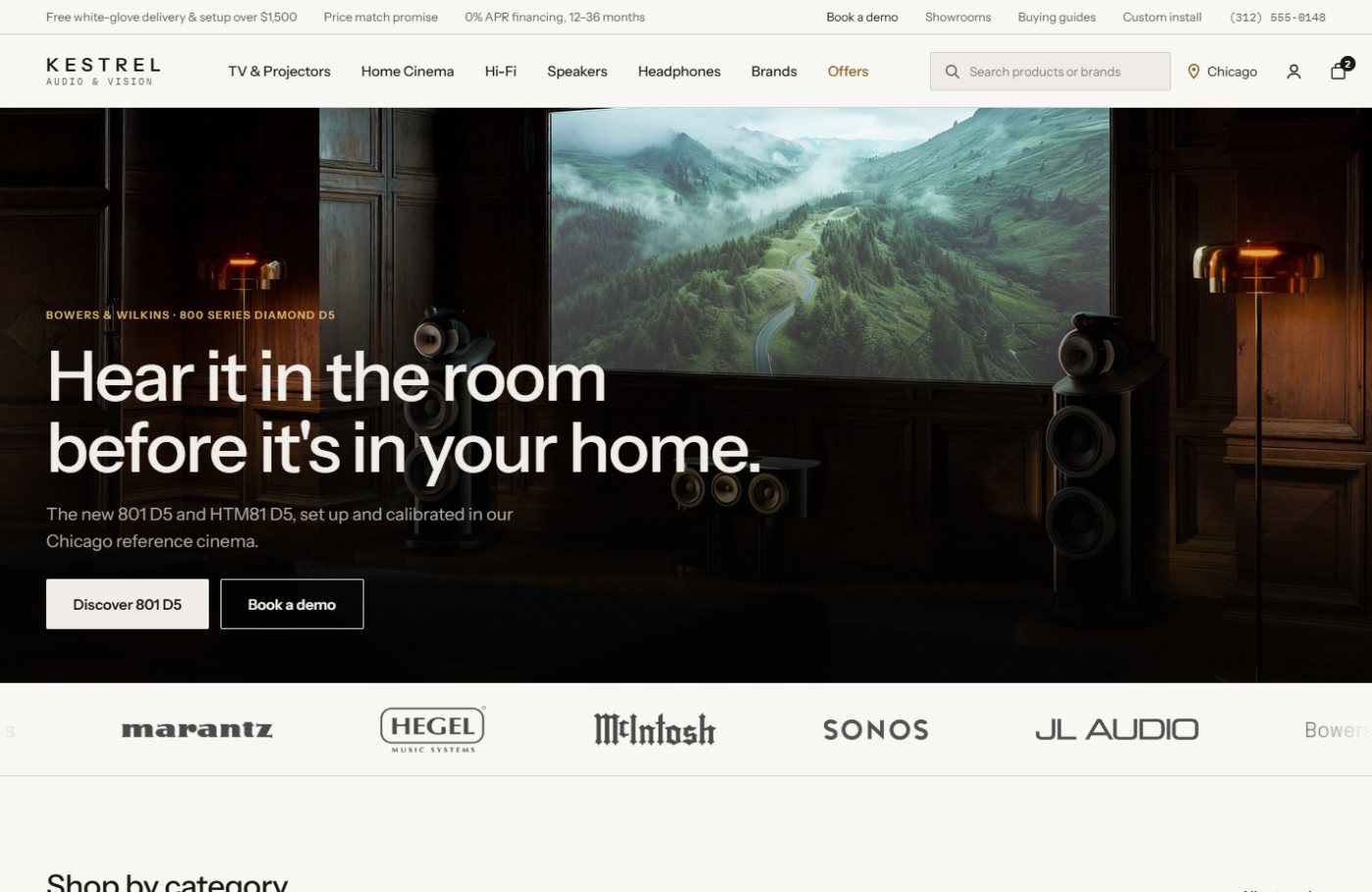
Brand-led and showroom-first. The homepage leads with a flagship system and a demo booking, then hands over to category and brand navigation, so a buyer can go straight to what they came for.
Link coming soon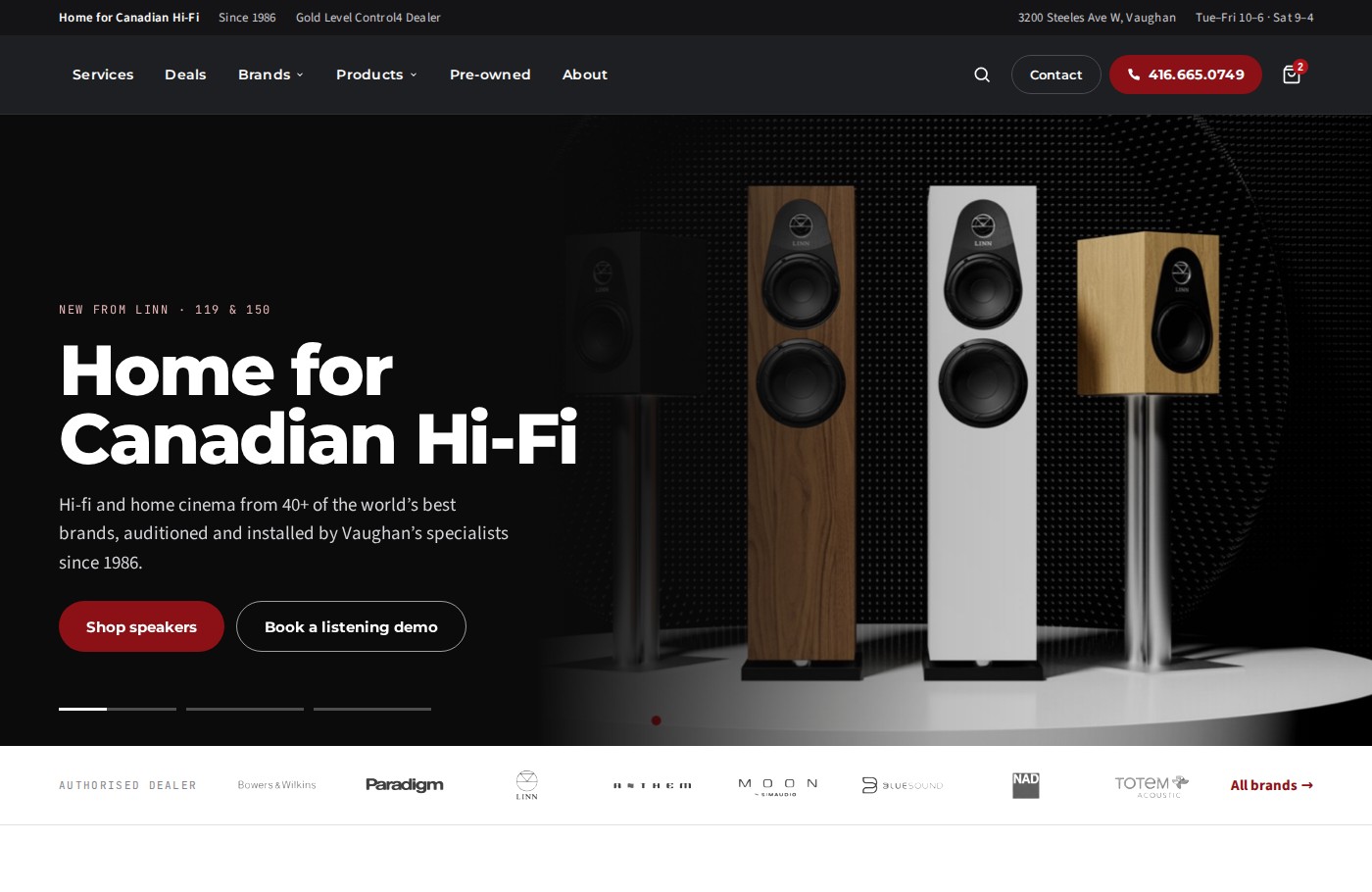
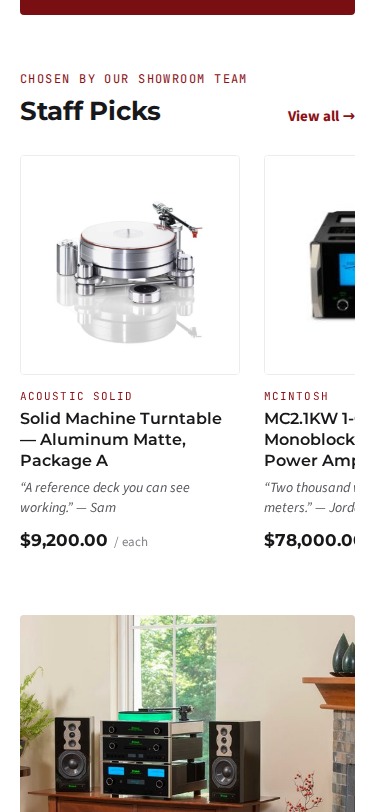
Authorised brands,
picked by people.
Built around how specialist hi-fi actually sells: authorised brands straight under the hero, shop by category, installation services, staff picks with a named recommendation on every card, and a clear path to book a listening demo.
Link coming soon
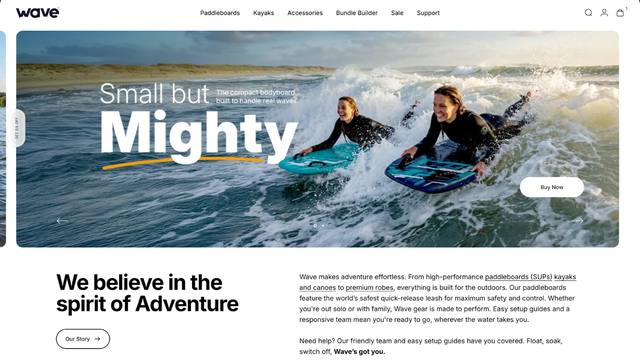
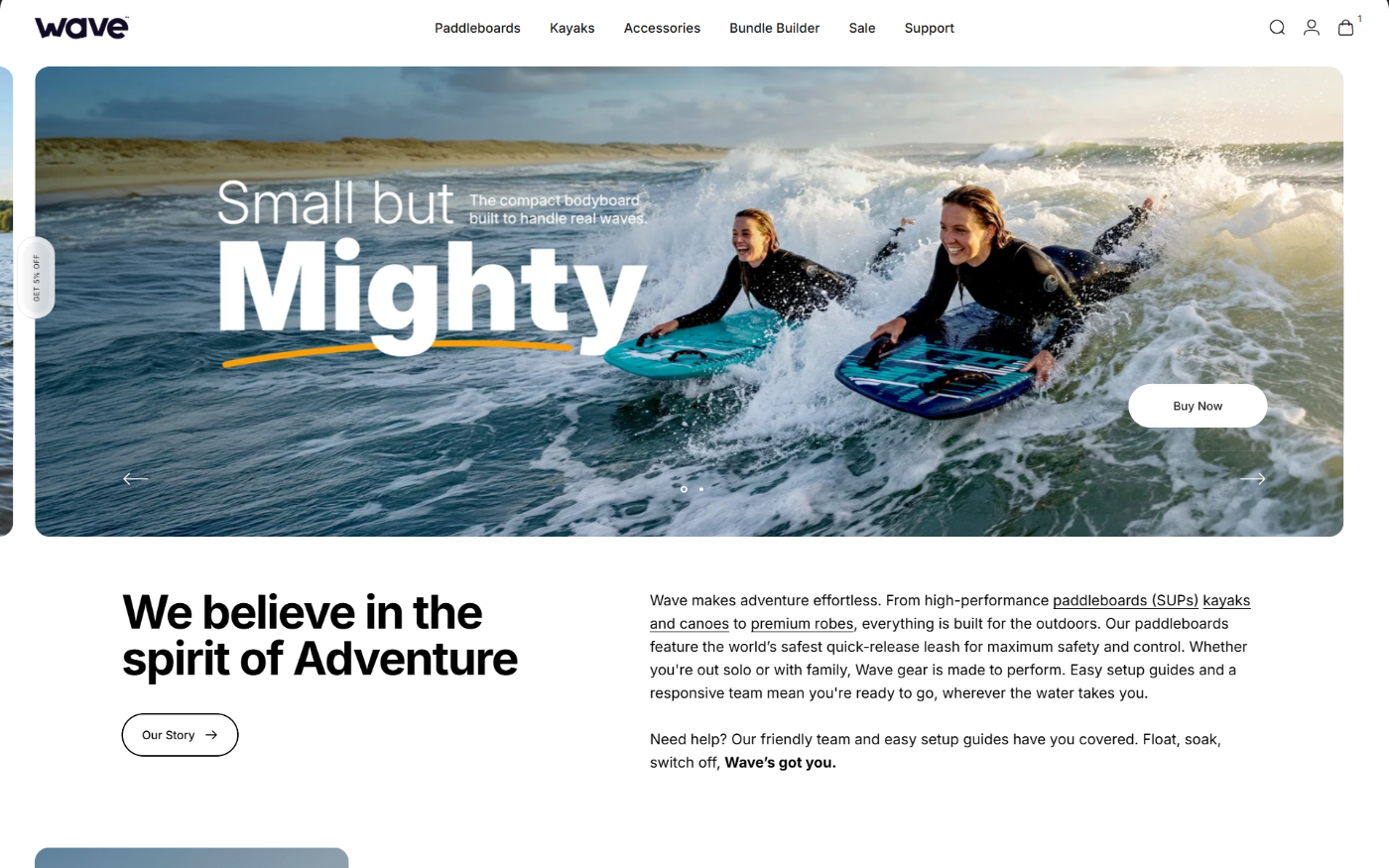
Paddleboards, kayaks
and a seasonal catalogue.
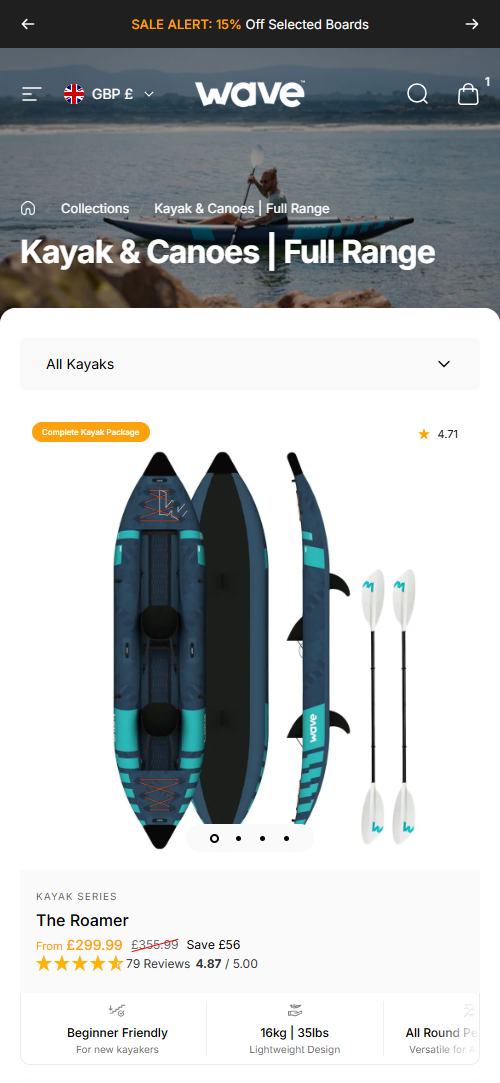
A seasonal, heavily-visual catalogue with a short buying window — so the homepage has to carry category navigation, range and trust in one screen. On mobile the kayak range page puts pricing, review scores and specification badges into the card itself, so the comparison happens in the grid.


Editorial apparel,
built to browse.
A fabric-first essentials brand where the photography does the selling. Full-bleed editorial blocks on desktop, and a collection grid on mobile with swipeable product imagery, inline size and colour options and add-to-basket in the tile — browsing and buying in the same gesture.

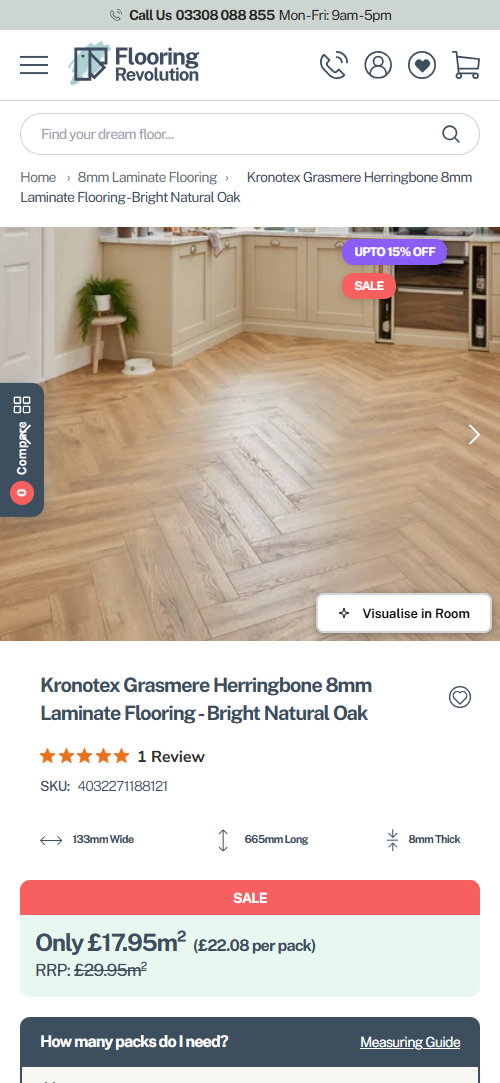
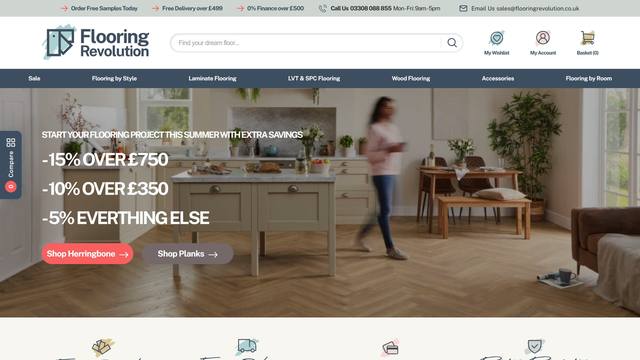
A large catalogue,
filtered six ways.
Considered-purchase retail: a deep range filtered by colour, type, style, thickness, price and wood grade. The product page carries an area calculator, live price per m², free-sample ordering and finance terms — the questions a flooring buyer asks before they will commit.
What clients say
about working together.
Past and present engagements.
Stores and brands designed, built,
rebuilt, migrated and optimised.
A few examples from over two decades and 350+ Shopify stores.














Still in contract? Plan now, switch on your end date.
Most legacy platform contracts run for a fixed term. I’ll read your end date with you, build and test your new Shopify store in the background, and switch over on the day you’re free. No rush, and no surprise renewal.
Launch before peak
Start this week and go live before Black Friday. For retailers who want off their platform before their busiest weeks.
Secure now, launch in January
I complete the risk check, data map and design now, then launch in the quiet weeks after Christmas, without touching your store during peak.
Not for every store.
I take on a small number of migrations at a time, so each one gets the senior attention it needs.
- i.Established retailers with a real business on the line
- ii.Stores on a legacy or proprietary ecommerce platform
- iii.Owners who want it done properly, not cheaply
- iv.Based in the UK
Questions retailers ask.
Rankings, customers, contracts, peak season and what happens if you’ve been told to go offline.
Get my free Platform Risk CheckFind out where you stand. Free, and without obligation.
Request your free audit. A senior specialist will check what’s publicly visible about your platform and come back with a plain-English summary, your options, and a fixed price for the move if you want one.
Sources
- PHP security release, 21 October 2026: CVE-2026-109618 and CVE-2026-109619, both rated 9.2 (CVSS v4.0), fixed in PHP 8.5.12, 8.4.27, 8.3.36 and 8.2.35.
- watchTowr, PHP2Shell FAQ, October 2026: no patches released for PHP 5 or 7.
- SentinelOne, “Stopping PHP2Shell”, 21 October 2026: affected code dates back to PHP 5.4.
- ABC News, 22 October 2026: CISA and FBI guidance.
- Sansec, “PHP2Shell”, 21 October 2026: timeline of the leak and early attack attempts.
- Case study figures as published on this site. Shopify PCI DSS Level 1 certification as stated by Shopify.