Shopify technical SEO case study: a hi-fi retailer’s store rebuilt, then grown
Seven agencies had failed. We fixed the store first.
A high-end AV retailer whose showroom was shut by lockdown, whose store couldn’t rank, and whose margins ruled out paid media. We rebuilt it with a technical SEO-first Shopify build, grew it organically, then switched on paid media only once the store could carry it. Six years later, revenue has tripled from its low point.
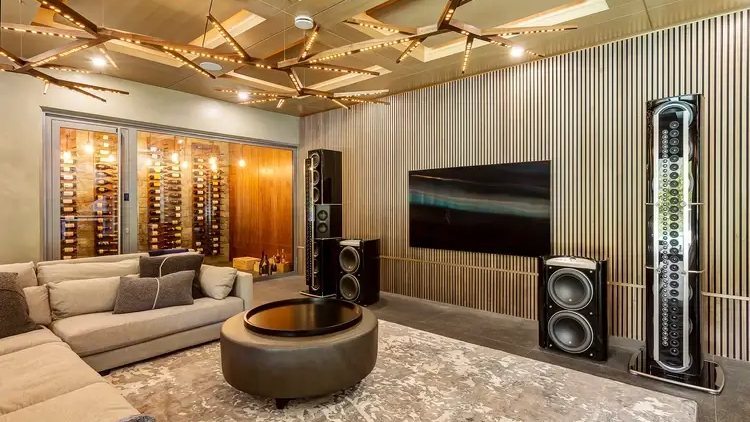


Scope note. The store documented here was designed, built and technically maintained by KA Consultancy from 2020 to 2025, and still runs on that build today. Since 2025 the store’s development has been handled by a third party outside this engagement, so the live site no longer reflects everything described on this page. The marketing engagement is ongoing.
Our client’s revenue is their own commercial information, published here as growth rates rather than absolute sums. Every figure on this page is measured against the store, not against what the advertising platforms reported.
A store that
was built not
to rank.
An exceptional offline business, two thousand products, and years of agencies promising traffic that never arrived. None of them had looked underneath. The store wasn’t short of marketing — it was structurally incapable of benefiting from it, and every channel was paying the price.
The till was overwriting the website
An in-house POS controlled stock online and in-store — and silently overwrote product metadata every time it synced. Any optimisation done on the site was undone the next day.
A filter app cloning the store
A low-quality product filter was self-canonicalising, generating mass duplicates of the root collection pages. Search engines saw hundreds of near-identical pages and trusted none of them.
Brand and type pages fighting each other
Shop by brand and shop by product type were essential to how customers buy — and on Shopify, they were duplicating each other’s collections and content wholesale.
Every page competing for the same terms
Sitewide keyword conflicts and cannibalisation meant the store’s own pages were outranking each other, while competitors took the positions that mattered.
3.2 seconds to load
On a catalogue built around large imagery and considered research, a slow store loses the visitor before the first product appears — whatever channel paid to bring them there.
The showroom closed overnight
Lockdown in early 2020 shut the primary revenue stream completely. Online stopped being a second channel and became the only one.
Paid media was off the table
Technology retail runs on some of the thinnest margins in ecommerce. With the store in this state, buying traffic would only have bought more visitors for a site that couldn’t convert them.
Seven agencies, no results
Every one had promised more traffic and more sales. None had diagnosed why the store couldn’t rank. The owner was close to giving up on online entirely.
Fix the
foundations.
Then grow.
No promises about traffic. The commitment was to remove what was stopping the store from ranking, so that every effort afterwards would actually compound. That meant starting outside Shopify entirely — with the system feeding it — and rebuilding the catalogue, the theme and the site architecture as one piece of work, delivered in eight weeks.
POS that respects the store
Consulted on a new in-house POS so stock could stay synced online and offline without overwriting a single optimised field.
A rebuilt theme
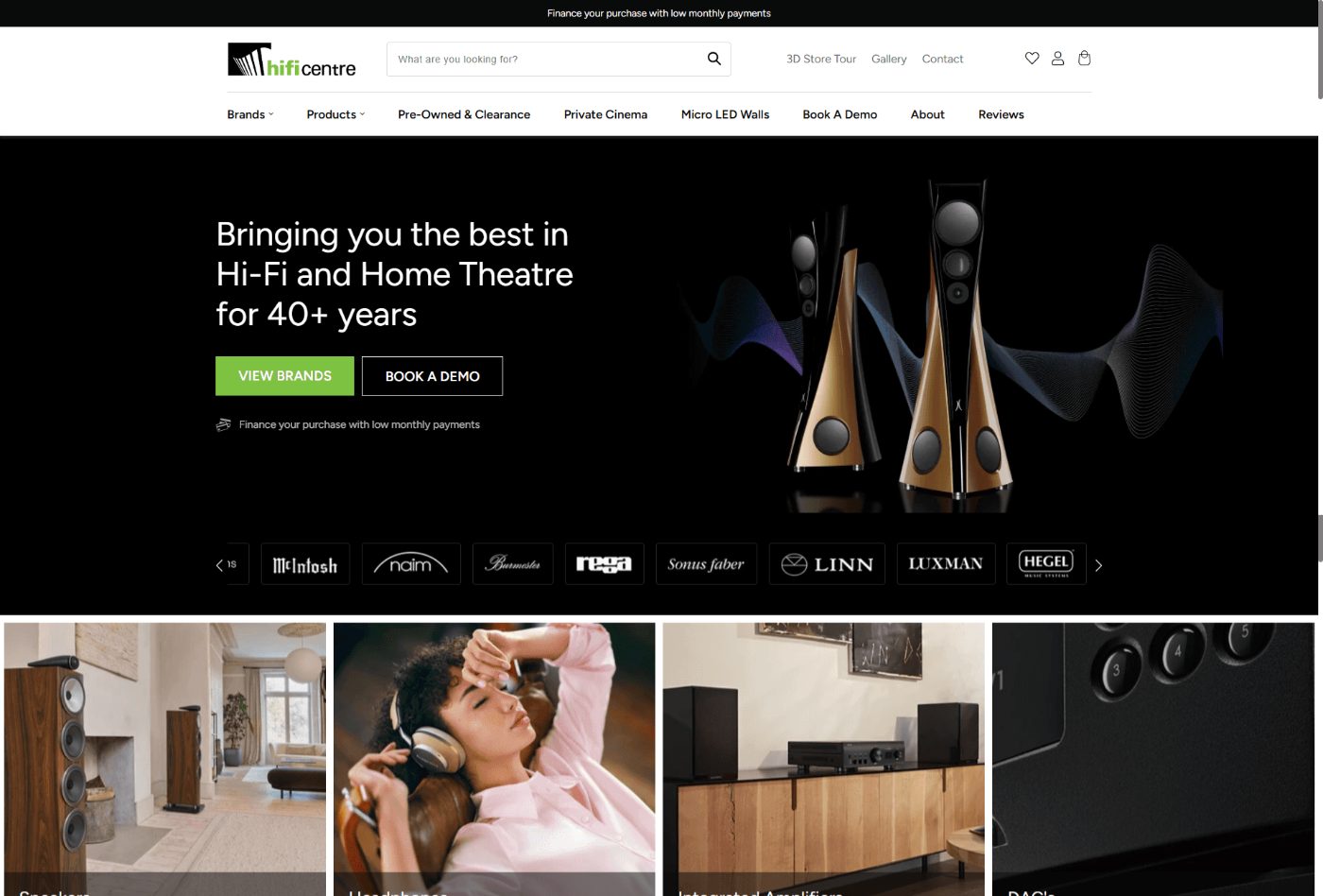
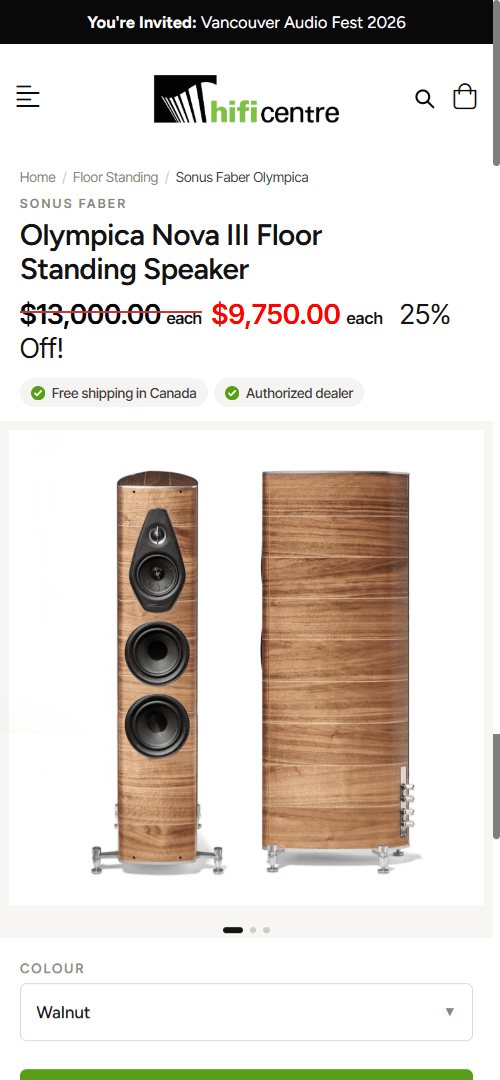
The store moved onto a new, search-first Shopify theme, designed around the client’s own brief and engineered for speed from the first line.
2,000+ products, by hand
A new product feed optimised manually across the whole catalogue — for search, for on-site filtering, and for Google Shopping at the same time.
Filtering that indexes
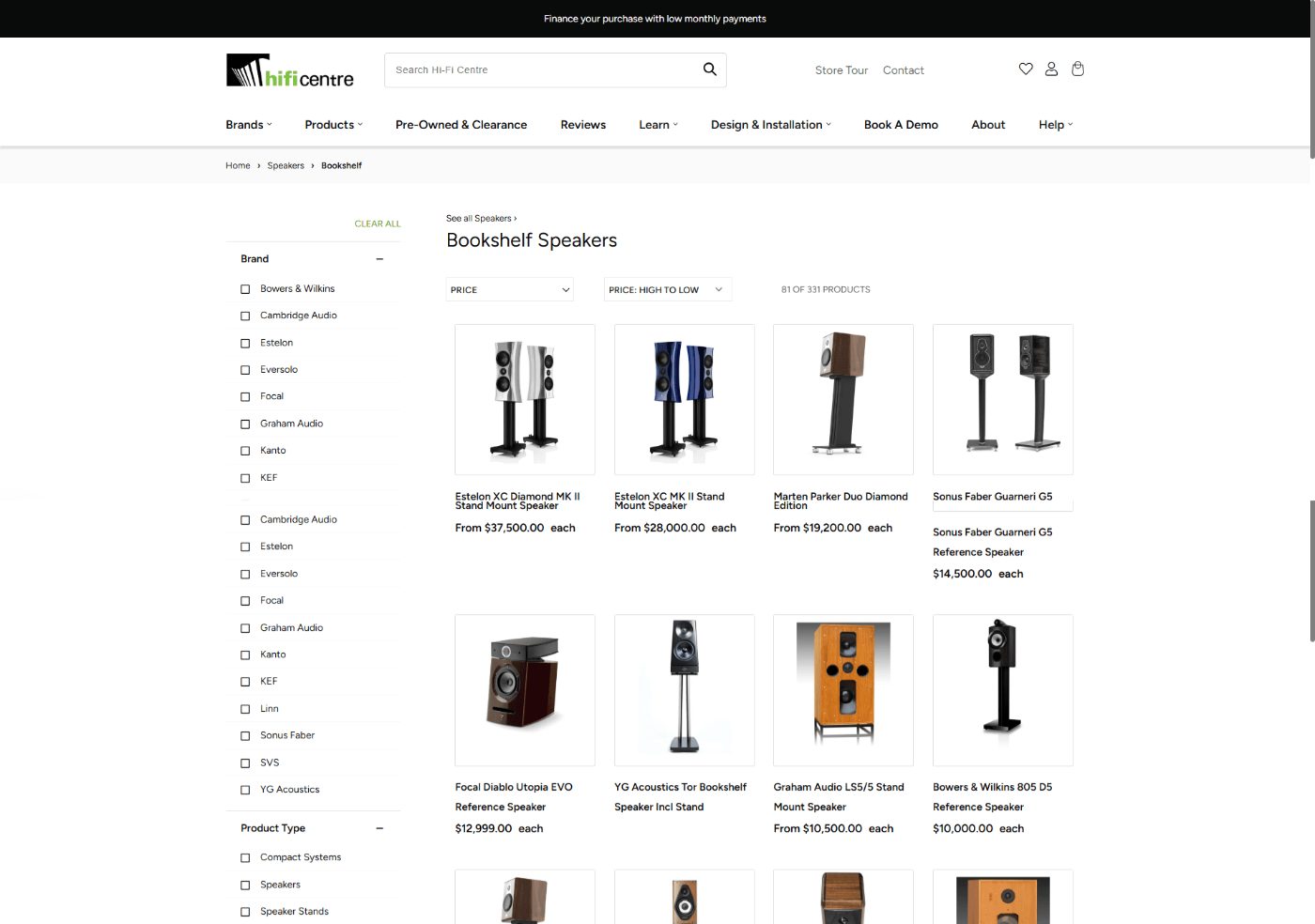
The broken filter app replaced with a discovery layer that generates hundreds of clean, optimised, high-intent landing pages instead of duplicates.
Every conflict resolved
Shop by brand and shop by product type kept intact for customers, with every metadata, keyword and content conflict between them eliminated through a canonical system built for the purpose.
Templates for how it sells
Custom page templates, and products flagged for in-store purchase only — so the website and the showroom work together rather than against each other.
Seven months.
No ad spend.
Organic only.
These are the first seven months after launch, before a single dollar went into paid media. The store stopped fighting itself, and search engines started rewarding it. Within two months, online sales were close to matching the entire previous year.
Paid media,
switched on only
when it could pay.
Google from late 2021, Meta from late 2024 — each introduced only once the store underneath could convert what they sent. The detail of how we run them stays between us, but the principles are worth stating plainly, because this is where most accounts in a thin-margin category go wrong.
Organic first, paid second
Paid traffic amplifies whatever the store already is. We spent the first year making it worth amplifying — which is why, when budget did arrive, it went into a store converting at more than double its old rate rather than into a leak.
One number, and it belongs to the store
Google reports an 8.3x return. Meta reports 28x on its campaigns. We report neither. Measured against everything the store actually took, every dollar of ad spend since 2021 sits behind roughly nineteen dollars of revenue — and that is the figure the client plans on.
Every channel earns a specific job
Google carries demand. Meta was given one narrow role — moving sale and clearance stock — and kept to about a tenth of total spend. A broader Meta test on the main range didn’t earn its place, so it was switched off within days rather than left running.
A retainer that only grows when the client does.
We work on a scaled, performance-related retainer, tied to quantifiable and measurable KPIs agreed at the outset — verified store revenue and profitability, not platform-reported sales.
Our fee increases only as the client’s revenue and profitability increase. If the numbers don’t move, neither does the invoice — so the client and the agency are always pulling toward the same result.
In a category where margins ruled paid media out entirely in 2020, total ad spend has since run at around 5% of store revenue — while revenue itself tripled.
Growth that
compounded,
year after year.
After the lockdown surge settled in 2022, the store grew every single year — and 2026 is on course to be the strongest yet. More orders, higher value orders, and a returning customer rate back to its highest since 2022.
Eight months of 2026 have already matched almost all of 2025 — before the fourth quarter, which has been the store’s strongest period every year. Order volume has more than doubled against 2022, and average order value across the engagement is up 30% on the years before it.
The returning rate dipped as acquisition scaled — and has recovered. Bringing in large numbers of new customers naturally dilutes the share who return. With new-customer growth now established, the rate is back above 16% for the first time since 2022.
Six years in.
Still growing.
What started as a technical rescue became a long-term partnership. The store was built and the search foundations laid between 2020 and 2025; the paid media has run continuously since, against those same foundations — which is why the growth has compounded rather than spiked.
Foundations that held
The structure, catalogue and search foundations built between 2020 and 2025 are still what the store runs on, and still what the results above were produced against.
Marketing, continuous
Google and Meta managed month to month by the same senior person who diagnosed the store in the first place — with no account handovers and no junior layer.
Planned around the seasons
Budget pushed hard into the fourth quarter, where this store does its biggest months, and held efficient through the quieter ones, so the troughs never undo the gains.
“Our online sales in the past two months are almost equal to the entire year before.”
“Over the years I have worked with no less than seven different agencies who all claimed they could boost traffic and increase our revenue, but every single one of them failed. KA Consultancy was the first company I’ve worked with that took the time to demonstrate the flaws in my website that prevented it from ranking. Instead of making claims about boosting traffic, they promised to fix the problems so that my SEO efforts actually produced results. There was no voodoo SEO magic.”
Igor Kivritsky · Owner, Hi-Fi CentreAbout the Hi-Fi Centre build.
Who rebuilt Hi-Fi Centre’s Shopify store?
KA Consultancy. Seven agencies had worked on it before and none had diagnosed why it could not rank — they had all promised traffic instead. The technical SEO rebuild started outside Shopify entirely, with the system feeding it, and delivered the catalogue, theme and site architecture as one piece of work in eight weeks.
Can a POS system damage your Shopify SEO?
Yes, and it is one of the least obvious causes of a store that will not rank. Hi-Fi Centre’s in-house POS controlled stock online and in-store, and silently overwrote product metadata every time it synced — so any optimisation done on the site was undone the following day. The fix was consulting on a new POS that keeps stock synced without overwriting a single optimised field.
Why was the store structurally incapable of ranking?
Several faults compounding at once: the POS overwriting metadata daily, a low-quality filter app self-canonicalising and cloning the root collection pages into hundreds of near-duplicates, shop-by-brand and shop-by-type collections duplicating each other wholesale, sitewide keyword cannibalisation so the store’s own pages outranked each other, and a 3.2 second load time on a catalogue built around large imagery.
How do you stop shop-by-brand and shop-by-type collections cannibalising each other?
Both routes are essential to how customers actually shop, so removing one is not an option. Every metadata, keyword and content conflict between them was eliminated through a canonical system built for the purpose, and the broken filter app was replaced with a discovery layer that generates clean, optimised, high-intent landing pages instead of duplicates.
Why start with organic search instead of paid media?
Technology retail runs on some of the thinnest margins in ecommerce. With the store in that state, buying traffic would only have bought more visitors for a site that could not convert them. The store ran for seven months after launch on no ad spend at all — within two months online sales were close to matching the entire previous year, and page load had dropped from 3.2 seconds to under one second.
What happens to a showroom business when the showroom closes?
Lockdown shut Hi-Fi Centre’s primary revenue stream overnight in early 2020, and online stopped being a second channel and became the only one. Products that genuinely need to be bought in person were flagged as in-store only, so the website and the showroom now work together rather than against each other. The showroom is now fed by the website.
Fix the store,
then grow it.
This engagement started as a diagnosis and became a six-year growth partnership. If your store has been through agencies that promised traffic without looking underneath, the first step is a free audit — of the website, the marketing, or both. No pitch, just an honest view of what’s holding the store back.
Senior-led, one to one. UK · US · Canada · Australia.