Shopify migration case study: an AV retailer’s ecommerce store, designed, built and marketed
Thirty premium brands. One store. Three years of compound growth.
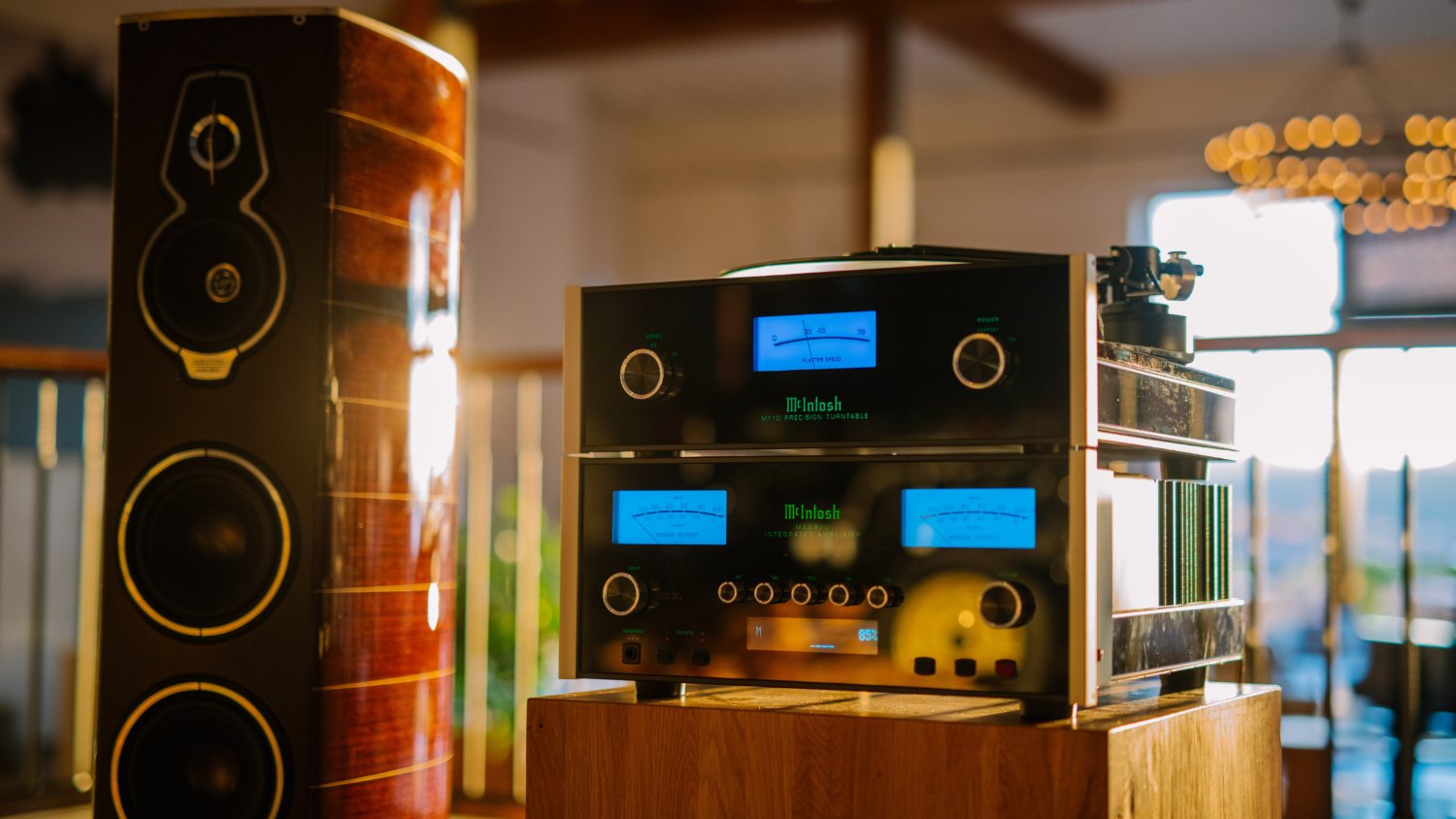
A bespoke Shopify store for a premium AV retailer, designed, built and migrated from the ground up — then grown, year after year, through senior-led paid media. This is what the full model looks like when design, development and marketing sit with one person.


Our client’s revenue is their own commercial information, published here as growth rates rather than absolute sums. Every figure on this page is measured against the store, not against what the advertising platforms reported.
Premium AV is not
normal ecommerce.
Almost every playbook written for ecommerce assumes you control your pricing, your product content, and where the sale closes. In authorised high-end audio and video retail, you control none of the three. Anyone working in this category who hasn’t understood that will burn your budget learning it.
You cannot compete on price
MAP and MSRP mean the same product sits at the same number on a dozen other sites — including the big boxes, and the grey-market sellers who don’t honour either. Discounting isn’t a lever you’re allowed to pull.
Everyone’s product page is identical
Approved imagery and brand-mandated copy mean every authorised dealer presents the same product in the same words. Differentiation has to come from somewhere other than the PDP.
Huge catalogue, thin demand per SKU
Thousands of products, most with negligible search volume, and a small group carrying the business. Generic category-wide tactics dilute budget across a catalogue that doesn’t reward it.
The sale rarely closes in the cart
Long research cycles that end in a phone call, an email, or a visit to the listening room. A meaningful share of revenue in this category never touches a checkout — so every ad dashboard understates the channel that actually started it.
High ticket, low order count
A handful of orders can swing an entire month. Standard optimisation logic, built for high-volume low-value retail, gives dangerously wrong answers at this order value.
You’re bidding against Amazon
On the identical product, with a fraction of the budget, against competitors who can afford to lose money on the category. That has to change the approach, not just the bids.
Vendor co-op money goes unclaimed
Brand marketing funds sit unused every year because nobody has the capacity to structure campaigns to qualify for them, or the paperwork discipline to claim them.
Attribution can’t see the showroom
The platforms measure what happens on the website. In this category, the most valuable thing advertising does is put someone in a room with the equipment — and no pixel has ever recorded that.
A store designed
for how this
category buys.
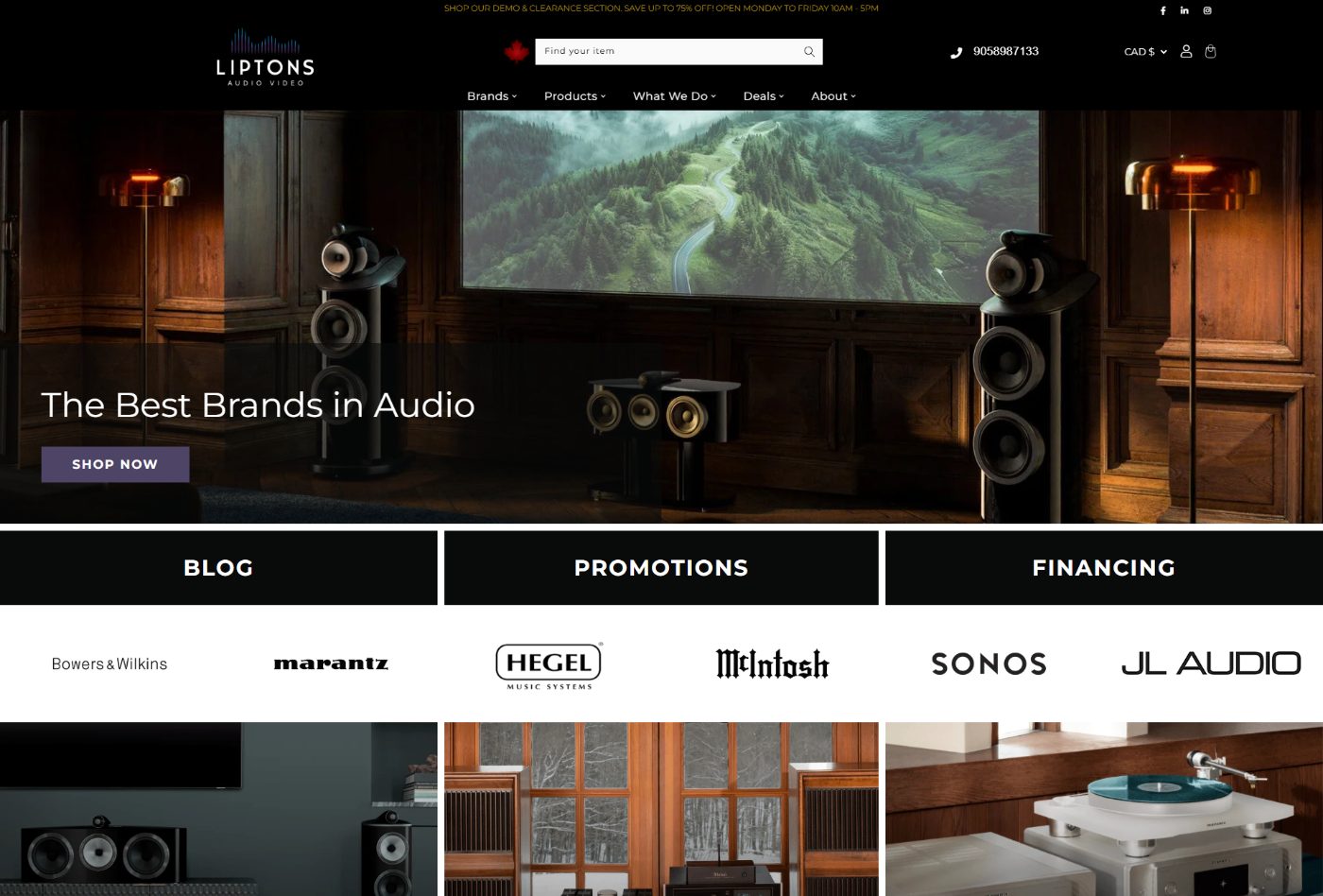
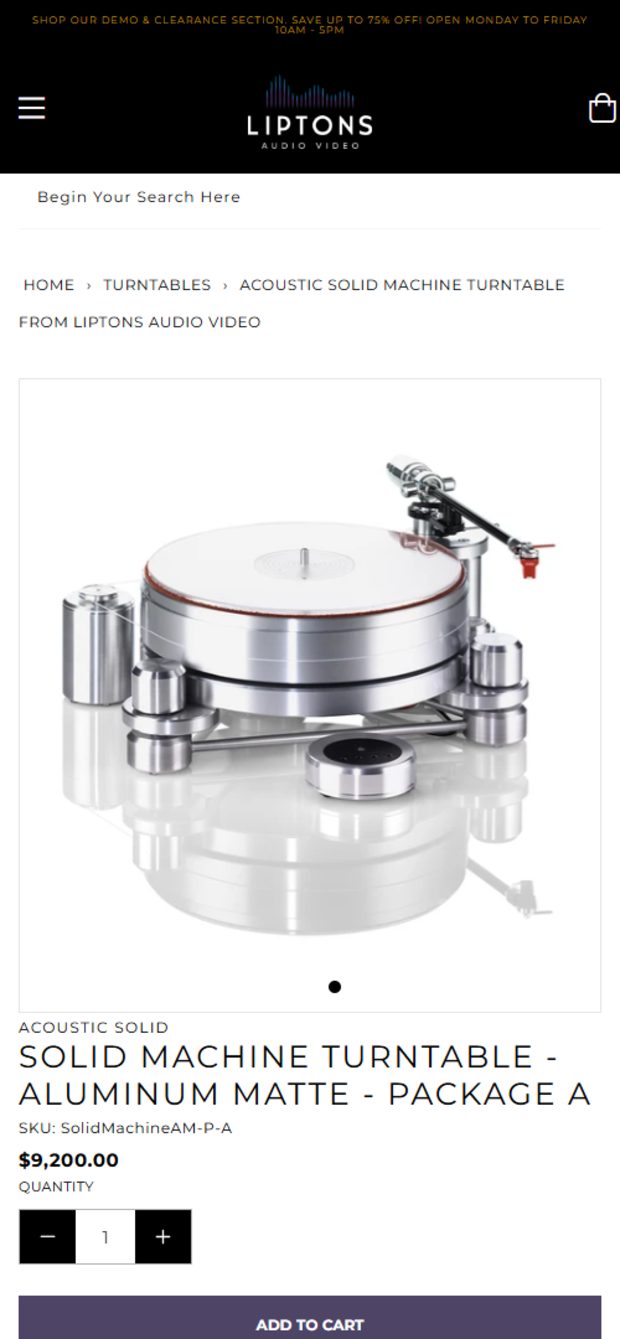
Not a theme purchase with the colours changed. A bespoke design taken from a structured brief, built as native Shopify theme code, with the full catalogue migrated and rebuilt underneath it. Engineered for speed, search rankings and conversion from the first line of code — a fast, lightweight store that ranks, draws qualified traffic and turns considered research into sales. Everything that follows on this page was only possible because this came first.
Design brief first
A detailed design process before a pixel was drawn, so the finished store carried the same authority online that the business has in its showroom.
Full data migration
Historic orders, customers and contacts migrated into Shopify cleanly, with nothing stranded on the previous system.
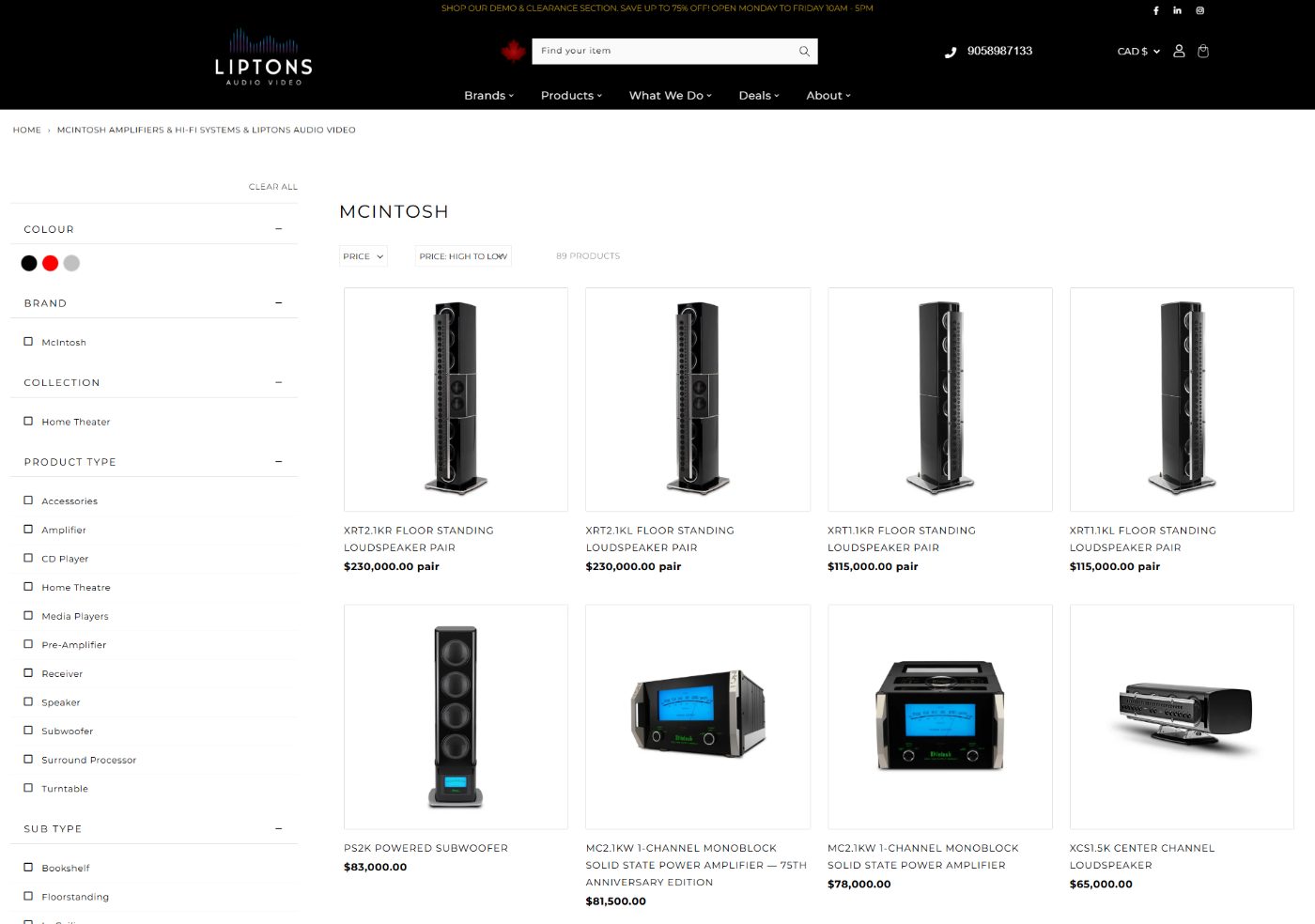
2,800+ products rebuilt
The entire catalogue optimised as a single dataset serving three jobs at once: organic search, on-site discovery, and product feeds.
Discovery that indexes
A filtering layer letting customers narrow a thirty-brand catalogue by what they actually care about — generating hundreds of high-intent landing pages as a by-product.
Bespoke templates
Custom page templates for the services the business offers, and for product ranges that need to be presented differently from the rest of the catalogue.
Verified after launch
Full technical analysis post-launch to confirm the migration held, followed by ongoing maintenance, support and development.
A platform that
could finally
carry growth.
Speed and conversion aren’t vanity metrics on a catalogue this size — they’re the difference between a paid click that converts and one that leaves before the first image appears. Every marketing result further down this page sits on top of these numbers.
Measured against
the store. Not the
dashboard.
Google and Meta, run as one account rather than two. The detail of how we structure them is the part clients pay for, so it stays between us — but the principles behind it are worth stating plainly, because most accounts we inherit fail on all three.
One number, and it belongs to the store
The ad platforms overclaim and underclaim simultaneously, in opposite directions, for different reasons. We stopped reporting on what they said and started reporting on what the business actually took — blended, across every channel, against total marketing investment.
Built around how this category buys
Demand in premium AV doesn’t behave like demand in general retail — not by season, not by product, not by how long a decision takes. The account was rebuilt around the real buying pattern rather than a standard retail calendar, and that single change is responsible for most of the growth on this page.
We say when something isn’t working
Some of what we tested didn’t earn its place, and we said so and stopped rather than quietly carrying it. Knowing what to switch off is worth as much in this category as knowing what to switch on — and it’s the part an agency measured on spend has no incentive to do.
A retainer that only grows when the client does.
We work on a scaled, performance-related retainer, tied to quantifiable and measurable KPIs agreed at the outset — verified store revenue and profitability, not platform-reported sales.
Our fee increases only as the client’s revenue and profitability increase. If the numbers don’t move, neither does the invoice — so the client and the agency are always pulling toward the same result.
Over the same period, total marketing cost fell from around 17.6% of revenue to roughly 8.5% — while revenue itself tripled.
Efficiency that
improved as
spend scaled.
The usual pattern is that returns decay as budget grows. This account did the opposite — investment scaled substantially while the blended return rose. And the growth came from better customers, not simply more of them.
Returning customer rate more than doubled in under two years, with average order value up 25% alongside it. In a category with a long research cycle and a high ticket, that combination is what a healthy account looks like — not one good quarter.
And a great deal of it closes off-platform. Assisted, phone and showroom orders grew faster than the online channel. Every blended figure here treats that revenue as real, because it is — and because no advertising platform will ever count it for you.
Three years in.
Still building.
This has never been a project that finished. The store, the catalogue and the marketing are managed as one continuing engagement — which is why the growth has compounded rather than spiked.
Two further development projects
Both now in planning: the next phase of the store, and a platform upgrade onto Shopify’s newest theme architecture.
Marketing, continuous
Google and Meta managed month to month by the same person who designed and built the store — with no account handovers and no junior layer.
Planned around the seasons
Budget and activity flexed through the year — pushed hard into the peaks like Black Friday and Christmas, held efficient through the quieter months, so the troughs never undo the gains.
When we moved to Shopify we needed someone who understood how a specialist AV retailer actually sells. KA Consultancy designed and built the new store, brought our whole catalogue across without missing a beat, and has run our Google and Meta advertising ever since. What sets KA Consultancy apart is the straight talking: clear reporting, honest answers, and every decision made on what grows the business rather than what looks good on a dashboard.
About the Lipton’s Audio & Video build.
Who designed and built Lipton’s Audio and Video’s Shopify store?
KA Consultancy, as a full Shopify migration for a premium AV retailer. The store was designed from a structured brief and built as native Shopify theme code — not a purchased theme with the colours changed, and no page-builder apps. The same person who engineered it still runs the Google and Meta marketing behind it, so there is no handover between the build team and the marketing team.
Why can’t a premium audio visual retailer compete on price online?
MAP and MSRP pricing mean the identical product sits at the identical number on a dozen other sites, including the big boxes and grey-market sellers who ignore both. Discounting is not a lever an authorised dealer is allowed to pull, so the store has to win on discovery, presentation and trust instead.
Every authorised dealer has the same product page. How do you differentiate?
Brand-mandated copy and approved imagery mean the product detail page is effectively fixed across every dealer. Differentiation has to come from the layer above it — catalogue structure, filtering and discovery. For Lipton’s that meant rebuilding 2,800 products as a single dataset serving organic search, on-site discovery and product feeds at once, with a filtering layer that generates hundreds of high-intent landing pages as a by-product.
How do you migrate a 2,800-product AV catalogue onto Shopify?
Catalogue, historic orders, customers and contacts were migrated into Shopify cleanly, with nothing stranded on the previous platform, then verified by full technical analysis after launch to confirm the migration held. The catalogue was not simply moved — every product was rebuilt to work for search, filtering and feeds simultaneously.
How do you measure marketing when the sale closes in the showroom?
A meaningful share of revenue in high-end AV never touches a checkout — it ends in a phone call, an email, or a visit to the listening room, and no pixel has ever recorded that. Performance is measured on blended return against total revenue rather than on what the ad platforms report. Over three years that produced 11.9x blended return and cut marketing cost from 17.6% to 8.5% of revenue.
What is vendor co-op money, and why does it usually go unclaimed?
Brands set aside marketing funds for authorised dealers, but claiming them requires campaigns structured to qualify and the paperwork discipline to follow through. Most retailers have neither the capacity nor the process, so the money sits unused year after year. It is one of the few genuine budget advantages available in this category.
Design, build,
then grow it.
This engagement started as a rebuild and became a three-year growth partnership. If that’s the shape of what you need, the first step is a free audit — of the website, the marketing, or both. No pitch, just an honest view of what’s holding the store back.
Senior-led, one to one. UK · US · Canada · Australia.